Schoharie County Dog Registration Information
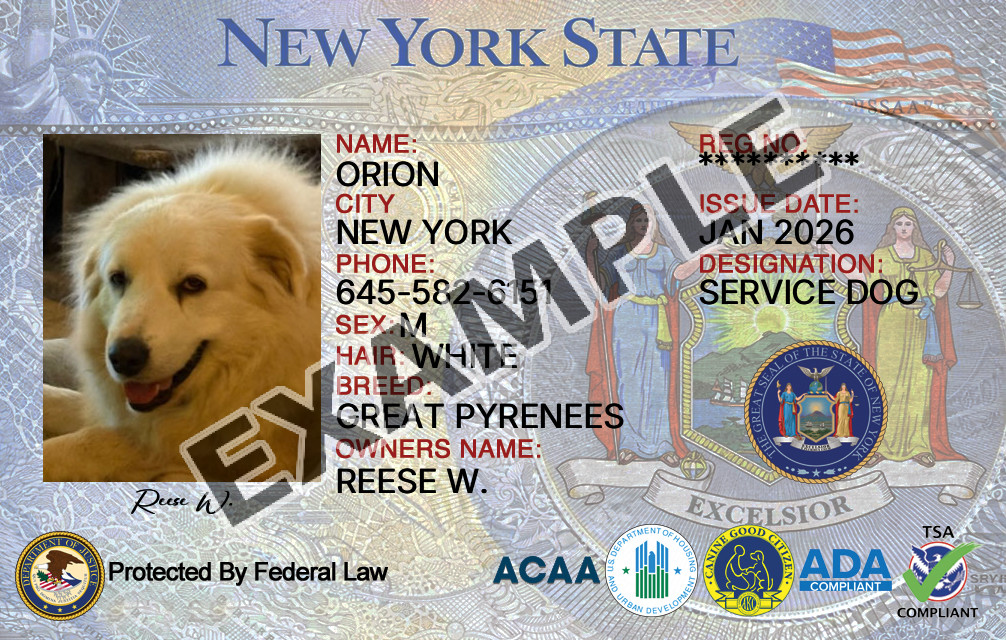
Service Dogs and Emotional Support Animals in Schoharie, New York
If you’re asking, “where do I register my dog in Schoharie County, New York for my service dog or emotional support dog,” the most important thing to know is that dog “registration” is usually handled locally as a dog license through your city, town, or village clerk (the municipality where your dog is kept). In other words, there typically isn’t one single countywide “service dog registry” or “ESA registry” you submit to—most residents complete the standard dog license in Schoharie County, New York process, then separately rely on the legal rules that apply to service dogs or emotional support animals.
Where to Register or License Your Dog in Schoharie County, New York
Because dog licensing is typically handled at the municipal level, the “right office” depends on where in Schoharie County you live. Below are official, locally relevant offices and contacts that can help residents confirm licensing steps, required documents, and where to submit an application. If you do not see your specific town listed, contact your town or village clerk for the municipality where your dog lives.
Schoharie County Clerk’s Office (County Government)
- Phone: (518) 295-8316
- Email: lawrencecaza@co.schoharie.ny.us
- Hours: Mon–Fri: 8:30 am – 5:00 pm
Note: Dog licenses are commonly issued by your municipality (town/village/city clerk). The County Clerk’s Office is a reliable official starting point for county contact information and direction if you are unsure which local clerk handles your dog license.
Village of Schoharie Office (Village Government)
- Phone: (518) 295-8500
- Email: (available upon request via village contact email)
- Hours: Mon–Fri: 9:00 am – 12:00 noon; 1:00 pm – 3:00 pm
If you live within the Village of Schoharie, the village office can help confirm whether the village issues dog licenses directly or whether licensing is handled through the Town of Schoharie clerk for your address.
Town of Cobleskill Dog Control Officer (Official Town Contact)
- Phone: (518) 925-7176
Dog control offices often work closely with town clerks on enforcement and licensing questions. For licensing submission details (fees, payment methods, forms), your town clerk is typically the licensing agent.
Overview of Dog Licensing in Schoharie County, New York
How licensing generally works (municipality-based)
For most residents, “registering your dog” means obtaining or renewing a local dog license through the municipality where the dog is kept. This is why searches like where to register a dog in Schoharie County, New York can be confusing: your county is Schoharie, but the licensing counter you use is often your town or village clerk, not a single county animal services department.
Why rabies proof is commonly required
Local dog licensing requirements typically include verifying a current rabies vaccination (or a documented rabies vaccination exemption if applicable). Many municipalities also track whether a dog is spayed or neutered, because local fees often differ between altered and unaltered dogs.
Municipal differences inside Schoharie County
Schoharie County includes multiple towns and villages, and each municipality can set its own fees and administrative procedures. That means:
- Your dog licensing requirements in Schoharie County, New York can vary slightly depending on your town/village (fees, accepted documents, renewal schedule, and whether licensing is done in person, by mail, or through local forms).
- Dog control contact information can differ by municipality; some towns list a dog control officer, while others route issues through a shared service arrangement.
- If you’re specifically searching for an animal control dog license Schoharie County, New York, be aware that “animal control” and “licensing” are related but not always the same office; the clerk is typically the licensing agent.
What You Need Before Registering a Dog
Common documents and information requested
Exact requirements depend on your municipality, but many clerks request similar items for a first-time license or renewal. Preparing these in advance can speed up processing:
- Rabies vaccination certificate showing the dog’s vaccination is current for the licensing period
- Owner identification (for example, a driver’s license or other ID)
- Proof of address/residency in the municipality (often required for correct licensing jurisdiction)
- Spay/neuter documentation (if applicable)
- Dog description (breed/mix, color/markings, age, sex) and the dog’s name
- Payment for the local licensing fee (method varies—some clerks accept checks or money orders, and some accept in-person payments)
If your dog is a service dog or emotional support animal
You may still be asked for the same basic health/safety documentation (especially rabies proof). However, licensing fees may be different for some working dogs depending on local rules. The most reliable approach is to ask your municipal clerk:
- Whether any license fee exemption applies for a service dog under local policy
- What documentation the clerk will accept (many clerks do not require special “registration cards”)
Steps to Register or License a Dog in Schoharie County, New York
Step 1: Identify your licensing municipality
Determine where your dog is “harbored” (kept). Your licensing agent is typically the municipality where the dog lives—your town, city, or village clerk. If your mailing address is confusing (especially if you live near a village boundary), call an official office and ask which municipality issues dog licenses for your specific street address.
Step 2: Gather the required paperwork
Collect your rabies certificate and any spay/neuter proof you have. If you are licensing a dog for the first time in a municipality, be ready to provide owner contact details and the dog’s basic description. If you are renewing, check whether your municipality sends renewal notices or requires you to request renewal materials.
Step 3: Submit the application and fee
Your municipal clerk can tell you whether applications are accepted in person, by mail, or via locally-provided forms. Once the license is issued, you typically receive a license record and an ID tag for the dog’s collar. Keep your paperwork in a safe place; it can help if the dog is lost or if you need to update ownership or address information later.
Step 4: Keep the license current and update changes
Renew on time and notify the clerk if key details change. Common updates include:
- Moving to a new town/village (you may need to license in the new municipality)
- Change in rabies vaccination status (new certificate)
- Change in spay/neuter status (updated documentation may reduce fees)
- Change of owner
Service Dog Laws in Schoharie County, New York
No universal federal “service dog registration”
Service dogs are not established through one universal federal government registry. A service dog’s legal status typically comes from disability-rights laws and the dog’s training to perform specific tasks related to a disability—not from purchasing an ID card or registering with a national database.
Service dog status vs. local licensing
Even if your dog is a service dog, you may still need to complete the standard local licensing steps (a dog license in Schoharie County, New York) where your dog lives. Think of this as two separate topics:
- Local license: a municipal record and tag, usually tied to rabies documentation and local fees
- Service dog status: a legal access concept based on disability-related tasks and behavior standards in public
Practical tips for residents
- Ask your municipal clerk whether any fee exemptions apply locally for service dogs.
- Keep your dog’s rabies paperwork current; municipalities commonly require it for licensing regardless of the dog’s role.
- For questions about public access disputes, focus on the relevant disability-rights rules rather than looking for “registration” paperwork.
Emotional Support Animal Rules in Schoharie County, New York
No universal government “ESA registration”
Emotional support animals (ESAs) are not “registered” through a single official federal program. ESA status is typically supported by documentation from a qualified healthcare provider in contexts where ESA accommodations may apply. However, an ESA is not the same as a trained service dog for public access purposes.
ESA status vs. local dog license requirements
In most cases, an ESA is still a dog living in a local municipality and may need a standard local license. If you are trying to figure out where to register a dog in Schoharie County, New York because you have an ESA, the process typically remains:
- License the dog through your municipality (town/village clerk)
- Maintain rabies vaccination proof and any other required local documentation
- Keep any ESA-related healthcare documentation private and separate, used only when necessary for a specific accommodation request
When ESA documentation may matter
ESA documentation often comes up for certain housing-related requests. Municipal dog licensing offices usually do not “approve” or “deny” ESA status; they focus on local licensing and rabies compliance.
Comparison: Dog License vs. Service Dog vs. Emotional Support Animal
| Category | Dog License (Municipal) | Service Dog | Emotional Support Animal (ESA) |
|---|---|---|---|
| What it is | A local government license/record for a dog kept in a specific municipality (town/village/city), usually with an ID tag. | A dog trained to perform specific tasks related to a person’s disability. | An animal that provides emotional support; status is typically supported by healthcare documentation for specific accommodation contexts. |
| Who issues it | Your municipal licensing agent (commonly the town or village clerk where the dog is harbored). | No single universal registry; status is based on disability-related task training and applicable laws. | No single universal registry; documentation typically comes from a qualified healthcare provider when needed. |
| Common documentation | Rabies vaccination certificate; spay/neuter proof if applicable; owner info; fee payment. | Generally not a “registration” document; may still need rabies/vet records for local licensing and health requirements. | Often a healthcare letter for accommodation requests; still needs rabies proof for municipal licensing if required locally. |
| Public access (stores/restaurants) | A license does not grant special public access rights by itself. | May have public access rights when the dog is trained and under control, consistent with applicable law. | Typically does not have the same public access status as a service dog. |
| Where to start in Schoharie County, NY | Contact your town/village clerk for the municipality where your dog lives; ask about licensing steps and fees. | License the dog locally if required, and follow service-dog legal standards for training/behavior and access. | License the dog locally if required; keep ESA documentation separate for contexts where it applies. |
Frequently Asked Questions
Do I have to “register” my service dog or ESA with the county?
Typically, you do not register a service dog or emotional support animal through a single countywide or federal registry. What most residents do is complete the standard dog licensing requirements in Schoharie County, New York through the municipality where the dog is kept, and then separately rely on the legal standards that apply to service dogs or ESAs.
Which office issues a dog license in Schoharie County, New York?
In many cases, the licensing agent is your town or village clerk (the municipality where the dog is harbored). If you are unsure which clerk is correct for your address, use the official contacts in the “Where to Register or License Your Dog in Schoharie County, New York” section and ask which municipal clerk handles dog licensing for your street address.
What if I live in a village (like the Village of Schoharie) but also in a town?
This is common in New York. Some services are administered by the village, while others are administered by the town. For dog licensing, procedures can vary. Call the village office and ask whether dog licensing is handled by the village office or by the town clerk for your specific address.
Will I need proof of rabies vaccination?
Very often, yes. Rabies proof is a common requirement for licensing. If your dog cannot be vaccinated for medical reasons, ask your municipal clerk what documentation is accepted for a vaccination exemption.
Is “animal control dog license Schoharie County, New York” the same as the town clerk?
Not always. Dog control/animal control officers may handle enforcement and stray/at-large complaints, while the clerk typically issues the actual license and tag. If you reach dog control first, ask them to confirm the correct clerk’s office for licensing in your municipality.
Register A Dog In Other New York Counties
Select your county below to get started with your dog’s ID card. Requirements and license designs may vary by county, so choose your location to see the correct options and complete your pup’s registration.
- Albany Dog License Cards
- Allegany Dog License Cards
- Bronx County Dog License Cards
- Broome Dog License Cards
- Cattaraugus Dog License Cards
- Cayuga Dog License Cards
- Chautauqua Dog License Cards
- Chemung Dog License Cards
- Chenago Dog License Cards
- Clinton Dog License Cards
- Columbia Dog License Cards
- consolidated borough-county government Dog License Cards
- Cortland Dog License Cards
- Delaware Dog License Cards
- Dutchess Dog License Cards
- Erie Dog License Cards
- Essex Dog License Cards
- Franklin Dog License Cards
- Fulton Dog License Cards
- Genesee Dog License Cards
- Greene Dog License Cards
- Hamilton Dog License Cards
- Herkimer Dog License Cards
- Jefferson Dog License Cards
- Kings County Dog License Cards
- Lewis Dog License Cards
- Livingston Dog License Cards
- Madison Dog License Cards
- Monroe Dog License Cards
- Montgomery Dog License Cards
- Nassau Dog License Cards
- New York County Dog License Cards
- Niagara Dog License Cards
- Oneida Dog License Cards
- Onondaga Dog License Cards
- Ontario Dog License Cards
- Orange Dog License Cards
- Orleans Dog License Cards
- Oswego Dog License Cards
- Otsego Dog License Cards
- Putnam Dog License Cards
- Queens County Dog License Cards
- Rensselaer Dog License Cards
- Richmond Dog License Cards
- Rockland Dog License Cards
- Saratoga Dog License Cards
- Schenectady Dog License Cards
- Schuyler Dog License Cards
- Seneca Dog License Cards
- St. Lawrence Dog License Cards
- Steuben Dog License Cards
- Suffolk Dog License Cards
- Sullivan Dog License Cards
- Tioga Dog License Cards
- Tompkins Dog License Cards
- Ulster Dog License Cards
- Warren Dog License Cards
- Washington Dog License Cards
- Wayne Dog License Cards
- Westchester Dog License Cards
- Wyoming Dog License Cards
- Yates Dog License Cards
